

Cleaning and Sanitizing Your Breast Pump Parts
Wash your hands.
Don’t touch your pump parts until you wash your hands. Once you wash your hands, don’t touch anything else to avoid cross-contamination.

.png)
Wash your pump parts after each use.
Place pump parts in a clean wash basin used only for infant feeding items. Do not place pump parts directly in the sink. Add soap and hot water to basin. Scrub items using a clean brush used only for infant feeding items. Rinse by holding items under running water.
Air-dry
Place pump parts, wash basin, and bottle brush on a clean, unused dish towel, paper towel or drying rack. Do not use a dish towel to rub or pat items dry! Clean wash basin and bottle brush.
.png)
.png)
Sanitize Daily
Place pump parts and breast milk containers in boiling water for 10 minutes each day. If you cannot boil your items, please place them on the top rack of your dishwasher and run utilizing the sanitizing cycle. Air dry on clean dish towel, paper towel or drying rack.
.png)
Transferring and Labeling for Donation
Pumped milk should be transferred from the pump containers into milk storage bags (BPA Free) and placed in the refrigerator or freezer immediately. Do not fill milk storage bags beyond the suggested fill mark.
Label breast milk storage bags above the bag seal line using a permanent marker with the full date (including the year) that the milk was pumped.
Place the individual bags in a larger bag (such as a Ziplock bag or grocery bag). Write your Last Name, Donor Number and Date of the oldest milk in that bag using permanent marker or seal a notecard with this information inside the bag. If you use the Pitcher Method, please click here for more information on how to label your milk.
Place bags of milk in a cooler with ice packs. Breast milk must be frozen from the time it is pumped and remain frozen until it is delivered by you to a Milk Drop Depot.


How to safely use the pitcher method for breast milk collection intended for donation
How to safely use the pitcher method for breast milk collection intended for donation

How to safely use the pitcher method for breast milk collection intended for donation
Safe Storage Guidelines
for Breast Milk Intended for Donation

Room Temperature
1 – 4 hours

Refrigerator
1-4 days

Side-by-Side Freezer
6 months

Deep Freezer
8 months
Do Not Store Pump Parts in the Refrigerator Between Uses
Refrigeration does not stop bacteria from growing. Infants have become ill from contaminated milk due to bacteria grown on pump parts that were not cleaned properly. Proper cleaning of breast pump parts and feeding items, and appropriate storage of milk, can help preserve the nutrient and protective properties of breast milk, and reduce the risk of introducing germs to an infant. Thus, cleaning pump parts thoroughly after every use is the best way to help protect babies from harmful germs that could be on pump parts, especially for babies who were born preterm or have other health conditions.
Do Not Use Pump Cleaning Wipes
Pump cleaning wipes do not adhere to the Human Milk Banking Association of North America (HMBANA)’s milk storage guidelines, as they do not reach into all the internal surfaces of the pump’s parts and may leave residue which is unsafe for medically fragile babies.
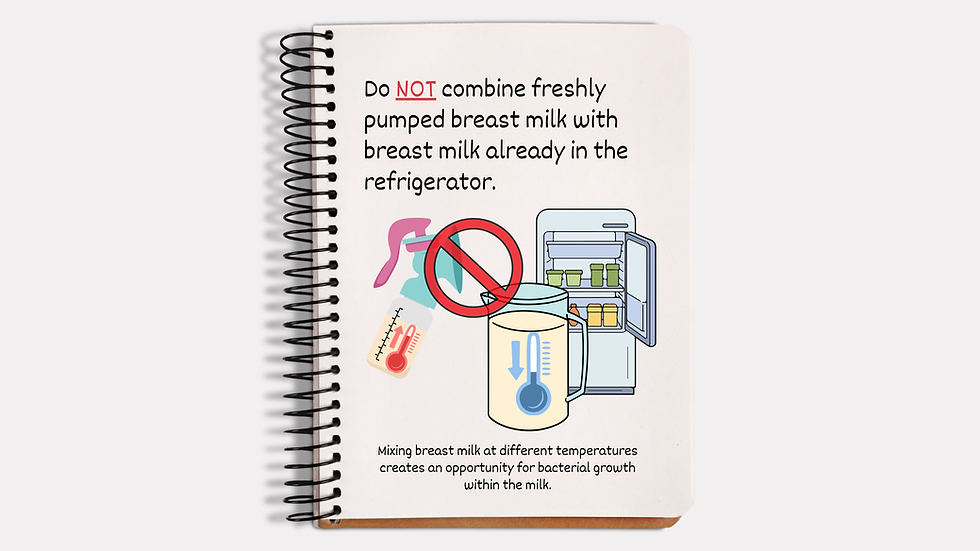
Do Not Combine Breast Milk That Are Varying Temperatures
“Stacking,” “layering,” or combining milk from more than one pumping session should be done only when the milk is the same temperature (i.e. all milk being combined is refrigerated). Mixing warm milk with cool milk is an opportunity for bacterial growth in the milk. Make sure all milk that is to be combined over multiple pumping sessions have been in the refrigerator for at least 30 mins. Label this combination bag with the date range that the milk was pumped. Store all milk in a milk storage bag designed for breast milk storage. Bags not specifically designed for breast milk storage may not be sterilized in the same way as milk storage containers. Please click here to read more about safe pitcher methods.
Do Not Add Anything to, Heat or Alter Your Breast Milk in Any Way
To ensure the safety and quality of donated human milk, please do not add anything to your expressed milk or alter it in any way. Do not mix in any other substances. Avoid heating, scalding, or otherwise processing your milk before freezing. Simply express your milk using clean collection techniques, listed above and store your milk in approved containers, and freeze it as soon as possible. These steps help preserve the valuable nutrients and protective properties of your milk and ensure it can be safely processed for the vulnerable infants who depend on donor milk.
Tips for Pumping Away from Home
When pumping away from home, please store your milk in a cooler with an ice pack or refrigerator. Place milk in the freezer once you arrive home if you know your baby will not need it within 96 hours since it was pumped.
If you are not able to safely wash your pump parts between uses, please pack multiple sets of pump parts and collection containers for each pump session while you are away.
Please wash and sanitize pump parts and containers once you arrive home.
Know your legal rights to pump at work and in public.